Home / Living Room
Small Living Room Ideas on a Budget
A small living room feels bigger when every piece earns its footprint. Start with right-sized seating, a mirror opposite the window, and storage that climbs the walls. One 5x7 rug, warm-white bulbs, and a ruthless declutter do more than any new sofa — and the whole refresh can cost under $200.
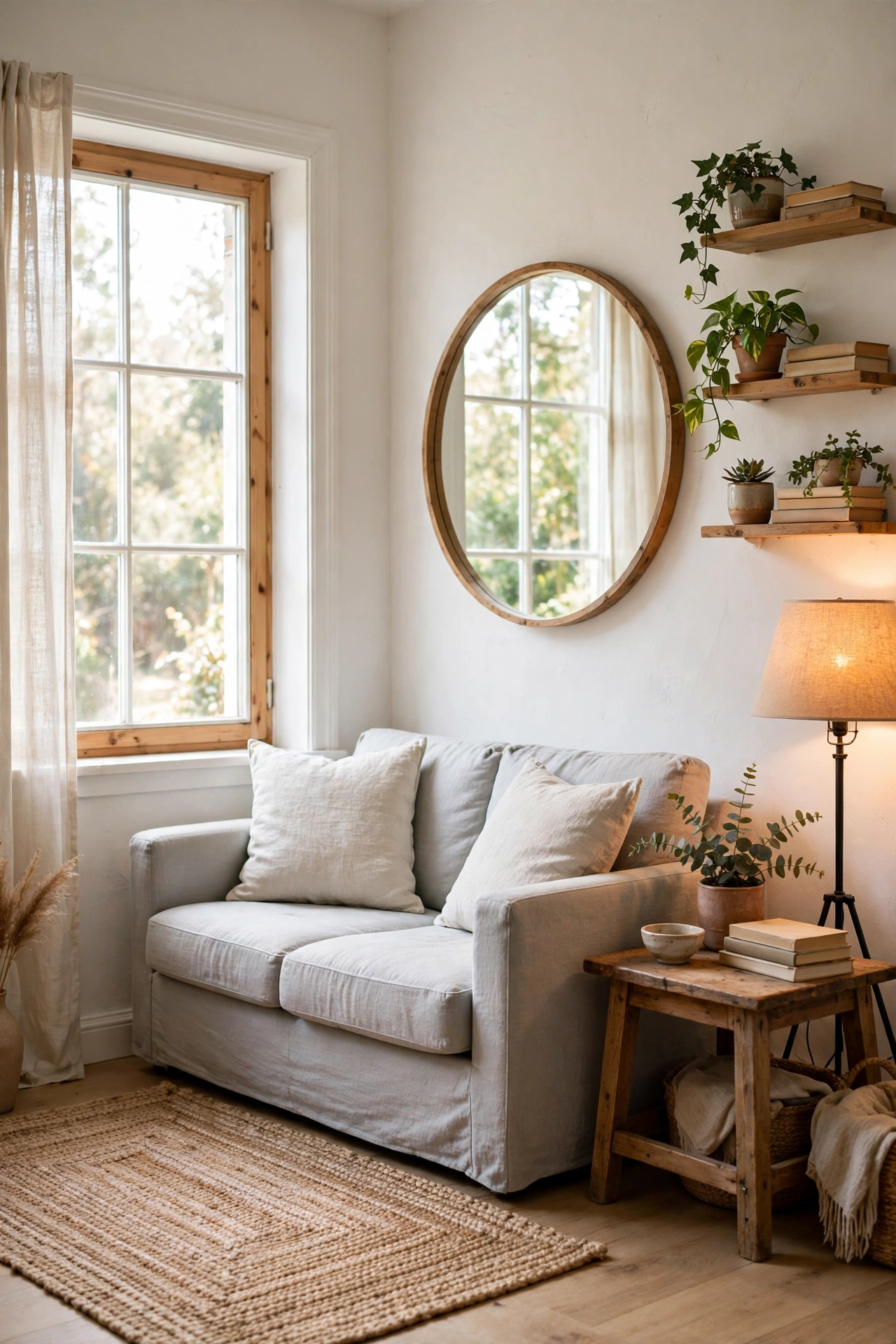
A small living room doesn’t need more square footage. It needs better decisions. I’ve watched a 12-by-14-foot room go from cramped to comfortable with six purchases and a weekend of rearranging — no construction, no new flooring, just furniture that fits, light used properly, and less visual noise.
What makes a small living room feel bigger?
Three things, in this order: furniture scale, light, and clutter. Get those right and a tiny room feels generous; get them wrong and even a big room feels crowded. The most common mistake is an oversized sofa. In a room under about 150 square feet, a 60–68 inch loveseat fits the scale, and leggy furniture — pieces you can see underneath — lets the floor read as one continuous surface. That alone makes the room feel wider.
Then light. Wash the windows, swap cold bulbs for warm-white ones (2700–3000K), and put a lamp in the darkest corner. Overhead lights flatten small rooms; lamps in corners give them depth. And paint helps more than people expect: a gallon of quality paint runs $30–50 and a light, warm white on the walls bounces light around in a way no lamp can match.
How much should I budget for a small living room refresh?
Honestly? Between $0 and $200 covers almost everything worth doing. The free moves come first: declutter every surface, rearrange the furniture, and swap cushions and throws between rooms. Then the cheap buys, roughly in this order: a 5x7 jute rug (about $52), a big round mirror (about $40), two linen-look pillow covers (about $20), a chunky knit throw ($18), and three floating shelves with brackets ($30). One real-world example put the whole list at $176 total — a loveseat scaled to the room, a mirror bouncing window light, vertical storage, and a rug that actually fits the seating area (see the small living room makeover on a $176 budget for the full breakdown). My rule is simple: spend where your eyes land first — the sofa wall, the rug, the light — and leave the rest alone.
What size rug should I use in a small living room?
One 5x7 rug, every time. This is the rule most small rooms break, and it’s the one that costs the most visually. The rug must be big enough for the front legs of all seating to sit on it. A too-small rug chops the floor into pieces and makes the room feel smaller than bare floor would. Two small rugs are worse than one right-sized one. If a new rug is out of reach, a non-slip pad under the one you already own stops it sliding and makes it feel new — and if you’re still deciding, our guide to cozy small bedrooms on a budget uses the same rug logic in a different room.
Where should I hang a mirror in a small living room?
Directly opposite the main window. A mirror across from a window doubles both the light and the view, which is the closest thing to adding a second window. Center it 57–60 inches from the floor to the mirror’s middle, and keep the frame thin or frameless so it disappears into the wall. A 28-inch round mirror is a good size for most small rooms — big enough to matter, small enough not to dominate. Don’t hang it where it reflects clutter or a blank wall; the reflection is the point.
What furniture works best in a small living room?
Furniture that does two jobs. A storage ottoman is a coffee table, extra seating, and hidden storage for $50–150. Nesting tables pull out when guests come and tuck away when they don’t. A wall-mounted TV frees up the surface a stand would eat. And storage should go up, not out: floating shelves for books and plants cost $20–50 per shelf and draw the eye upward, which makes ceilings feel taller. Tall, narrow bookcases beat wide, short ones for the same reason. The test I use before anything comes back into the room: does it earn its footprint? If the answer is “maybe,” it lives somewhere else.
Frequently asked questions
What is the cheapest way to make a small living room look better?
Declutter and rearrange — both are free. Clear every surface, remove what doesn’t belong, then move the furniture and test the new layout by walking through it. That alone changes most small rooms.
What color makes a small living room look bigger?
Warm whites, pale gray, and soft pastels reflect more light and make walls recede. Paint the trim the same color as the walls so the eye doesn’t stop at every edge.
How big should a rug be in a small living room?
One 5x7 rug beats two small ones. It should be large enough for the front legs of all seating to sit on it — a too-small rug chops the floor into pieces and makes the room feel smaller.
Can I put a big sofa in a small living room?
Usually not. In rooms under about 150 square feet, a 60–68 inch loveseat fits the scale better, and pieces you can see under make the floor look continuous and the room feel larger.
For more budget living room inspiration, Homestyler’s small living room design guide covers the same five moves — light colors, multifunctional furniture, layered lighting, secondhand finds, and rugs and mirrors — with a floor-planner angle.