Home / Budget Decor
DIY Gallery Wall Ideas
A gallery wall is four decisions: the layout, the spacing, the frames, and the hanging. Start with one of four beginner layouts — grid, salon, ledge, or single row — keep 2–3 inches between frames, and test everything with paper templates on the wall before you drill a single hole.
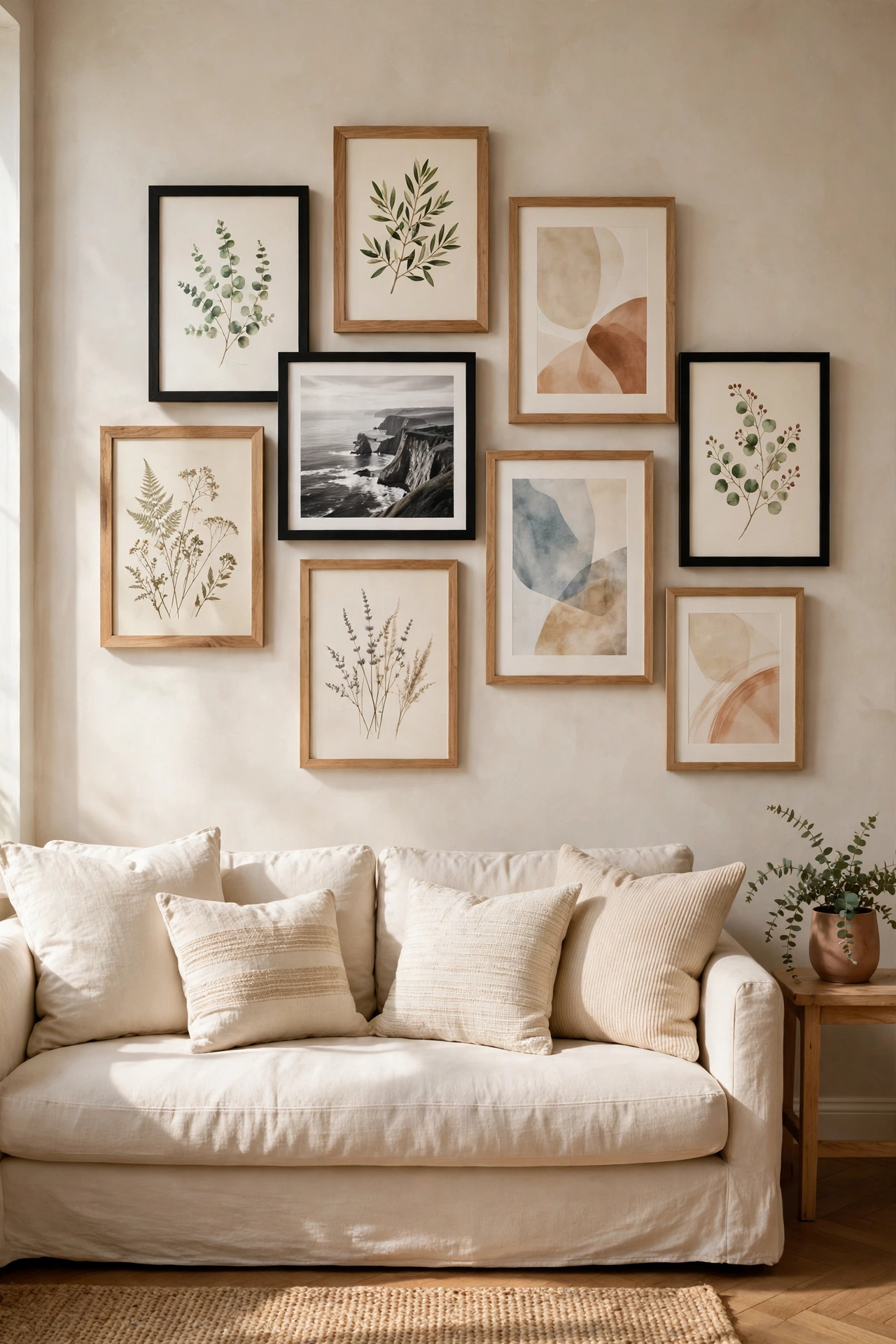
A gallery wall is simply a group of framed pictures hung together as one display — photos, prints, drawings, or a mix of all of them. It’s the fastest way to fill a blank wall, and it’s the project most people get wrong on the first try, because they start with a hammer instead of a plan. Good gallery wall ideas start with a plan, not a hammer: choose your layout, set your spacing, and test the arrangement with paper templates before you make a single hole. This guide walks through that plan, so your first gallery wall looks balanced instead of accidental.
What is the easiest gallery wall layout for beginners?
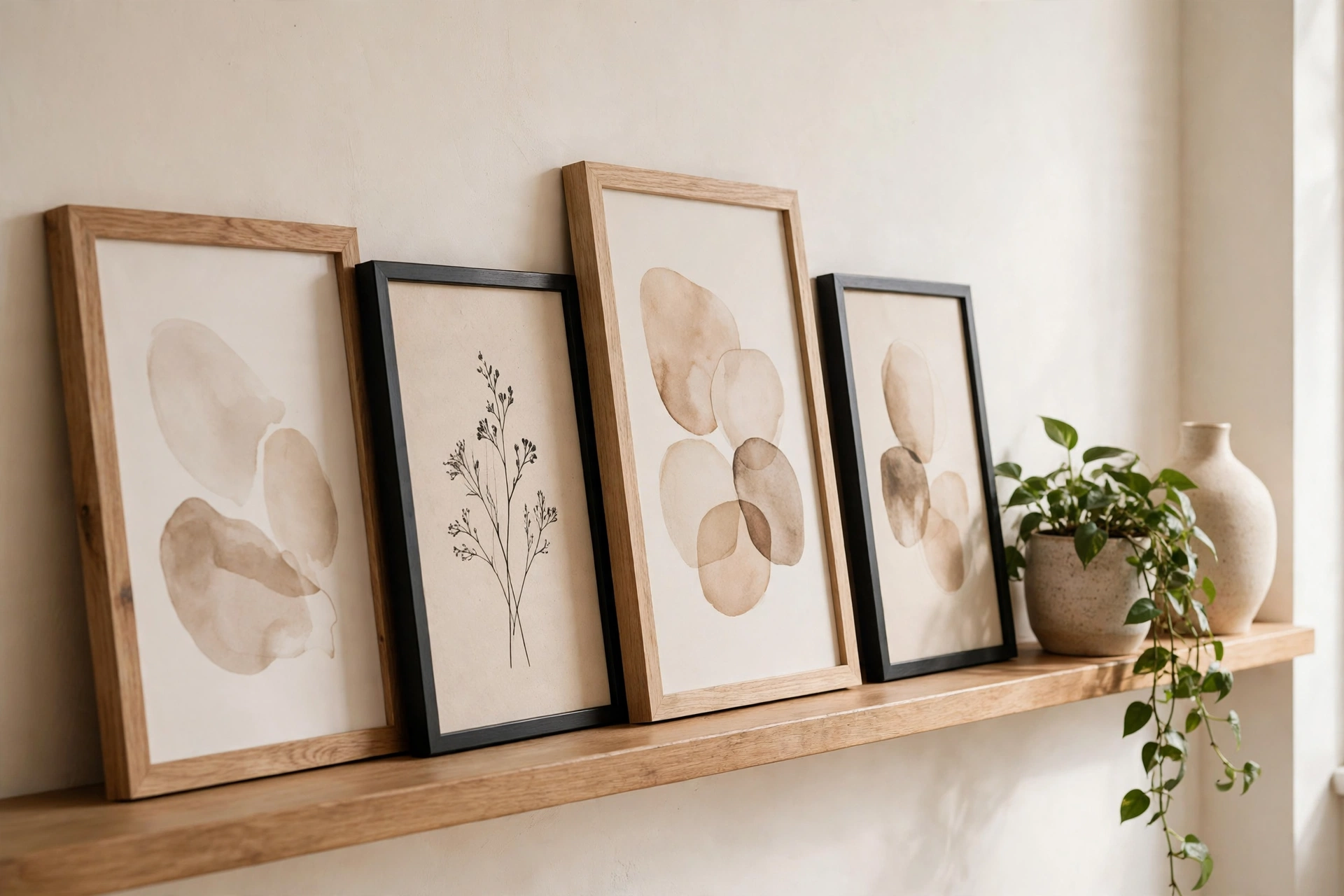
Four layouts cover nearly every wall, and each one suits a different situation. The grid uses same-size frames in straight rows and columns with equal gaps everywhere — it reads calm and intentional, and it’s the most forgiving layout to measure. A six-foot wall takes three columns of 12-by-16-inch frames at a 2.5-inch gap, centered to leave about 15 inches of clear wall on each side. The salon layout mixes frame sizes in a loose, organic group: one anchor frame 16 by 20 inches or larger at the center, with 8-by-10s and 11-by-14s around it and gaps varying between 1.5 and 3 inches. It’s the classic look for the wall above a sofa and the best fit for a collection that has grown over time. The ledge row uses a narrow wooden picture rail that holds frames leaning against the wall — two rails, two screws each, four holes for the whole wall, and you can rearrange without drilling again. And the single row hangs frames in one straight line at the same height — the simplest of all, and the one I’d pick for a hallway. If you’re stuck, start with the grid: it forgives the least, which sounds bad, but it also teaches you the spacing rules fastest, and you can always loosen it into a salon hang later.
How far apart should frames be on a gallery wall?
Leave 2–3 inches (5–8 cm) between frames. That’s the number that separates a gallery wall that looks professional from one that looks thrown together — close enough to read as one display, far enough apart that each frame breathes. For a grid, keep every gap identical; for a salon hang, let gaps vary between 1.5 and 3 inches, because the whole point is that the inside is organic. The other spacing number that matters is height: hang the center of the whole arrangement at about 57 inches (145 cm) from the floor — the standard eye-level height used in homes and galleries. Above a sofa, the bottom of the lowest frame should sit 6–8 inches above the sofa back. Measure your wall first and mark the same amount of space on the floor with painter’s tape: arrange your frames inside that outline on the floor, and you’ll know the count before you buy anything. The count comes from the wall’s width, not from a picture you saw — that’s the arithmetic most guides skip.
How do I plan a gallery wall without making holes?
Use the paper template method — the single best habit for a first gallery wall. Cut brown packing paper or old newspaper to the size of each frame, tape the shapes to the wall with painter’s tape, and live with them for a day. Move pieces around freely, mark nail positions exactly on the paper, and only then pick up the hammer. You’ll see the finished arrangement on the real wall before committing to a single hole, and you’ll catch the two mistakes that ruin most first walls: frames hung too high, and a layout that drifts to one side. The other no-hole option is the picture ledge: frames lean on it, so you can rearrange them without nails, and two ledges cost less than a set of matching frames. Our floating shelves guide uses the same stud-finding and leveling rules — a ledge mounts exactly like a shelf, and the same $15 bracket logic applies. And if your wall is above the sofa, the small living room guide shows how the gallery wall and the rug work together to anchor the seating area.
What frames should I use for a gallery wall?
Start with what you already own. Gather every frame you’re willing to rearrange — from dressers, side tables, and tucked-away shelves — then sort them into loose groups: similar finishes (black, white, metal, painted, natural wood), similar proportions (squares, tall rectangles, wide rectangles), or similar contents (family photos, landscapes, drawings). One frame style in different sizes is the safest choice for a first wall: black frames suit bold prints and photographs, natural wood suits soft, warm art and botanical prints, white frames suit bright, airy rooms. If your frames don’t match, give them one repeated detail — a mat color, a frame color, or a shade that appears in several pictures. Thrift stores are the best frame source I know: a $3 frame and a can of spray paint become a matching set in an afternoon. Budget the whole wall at $30–$250 depending on how many frames you buy versus reuse, and spend the money on the anchor frame — the biggest one, 16 by 20 or larger — because it sets the tone for everything around it. For layout inspiration, Artifact Uprising’s gallery wall guide shows ten layouts with real spacing, and Plant As Deco’s layout guide matches four patterns to the wall you actually have, with the gap math for each one.
Frequently asked questions
How many frames do I need for a gallery wall?
Start with four to six. Four frames can form a square, six can make two rows of three. Fewer frames with generous spacing looks more intentional than a wall crowded with small pieces.
Can I make a gallery wall without drilling?
Yes. Picture ledges need only two screws each and hold frames leaning against the wall, and adhesive strips work for light frames. A ledge row is the best renter-friendly option because you can rearrange without new holes.
Should all my frames match?
No. One repeated detail ties mismatched frames together — a frame color, a mat color, or a shade that appears in several pictures. One frame style in different sizes is the safest choice for a first wall.
Where is the best place for a first gallery wall?
Above the sofa. The sofa gives the wall a natural anchor, the wall is usually the biggest blank one in the house, and the layout is forgiving because the furniture grounds it.